I walked into a nonprofit last year and within 20 minutes, the Executive Director was telling me
about her mother's dementia diagnosis, the federal funding cuts she'd just seen hit the headlines that morning, and how if she doesn't leave by 4:15 pm, she'll miss her dog's vet appointment and end up back on a seven-week waitlist. Her fifth grader has a bake sale tomorrow and needs store-bought cookies with the ingredient labels left on. Her board meeting is Thursday, and the financials aren't ready.
I'd asked about her donor management system.
But here's the thing: that flood of context? That wasn't oversharing. That was the answer.
The System Nobody Used
Because her donor management system isn't broken in isolation. It's broken because she's the one holding everything together, manually, with no infrastructure underneath her, while life keeps demanding more.
She doesn't need better software. She needs someone to see the whole picture and build something that holds without requiring her to be a hero every single day.
That's where I come in. But not in the way most operations consultants do.
There's a stereotype about systems people. Heads down. Introverted. Fluent in spreadsheets, awkward in conversation. They see the workflow before they see the human sitting in front of them.
I am not that person.
What I am actually doing while we're talking
I'm genuinely curious about what's happening in your world, not just your org chart. I build trust fast, not because it's a tactic, but because I actually care, and people can feel the difference.
And while we're talking, while you're telling me about your mother and your dog and the grant report that's three weeks late, my brain is doing something else entirely.
It's mapping.
It's noticing the disconnection between what you're saying and what's actually broken underneath.
It's pulling patterns from a biotech client three years ago, a commercial fishing operation, an e-commerce startup, a healthcare system that had the same bottleneck you're describing but called it something different.
I'm not taking notes on your vet appointment because I'm polite. I'm taking notes because it tells me something critical: your systems have no margin. One sick dog and the whole week falls apart.
That's not a personal failing. That's an infrastructure problem.
Why Most Operations Overhauls Fail
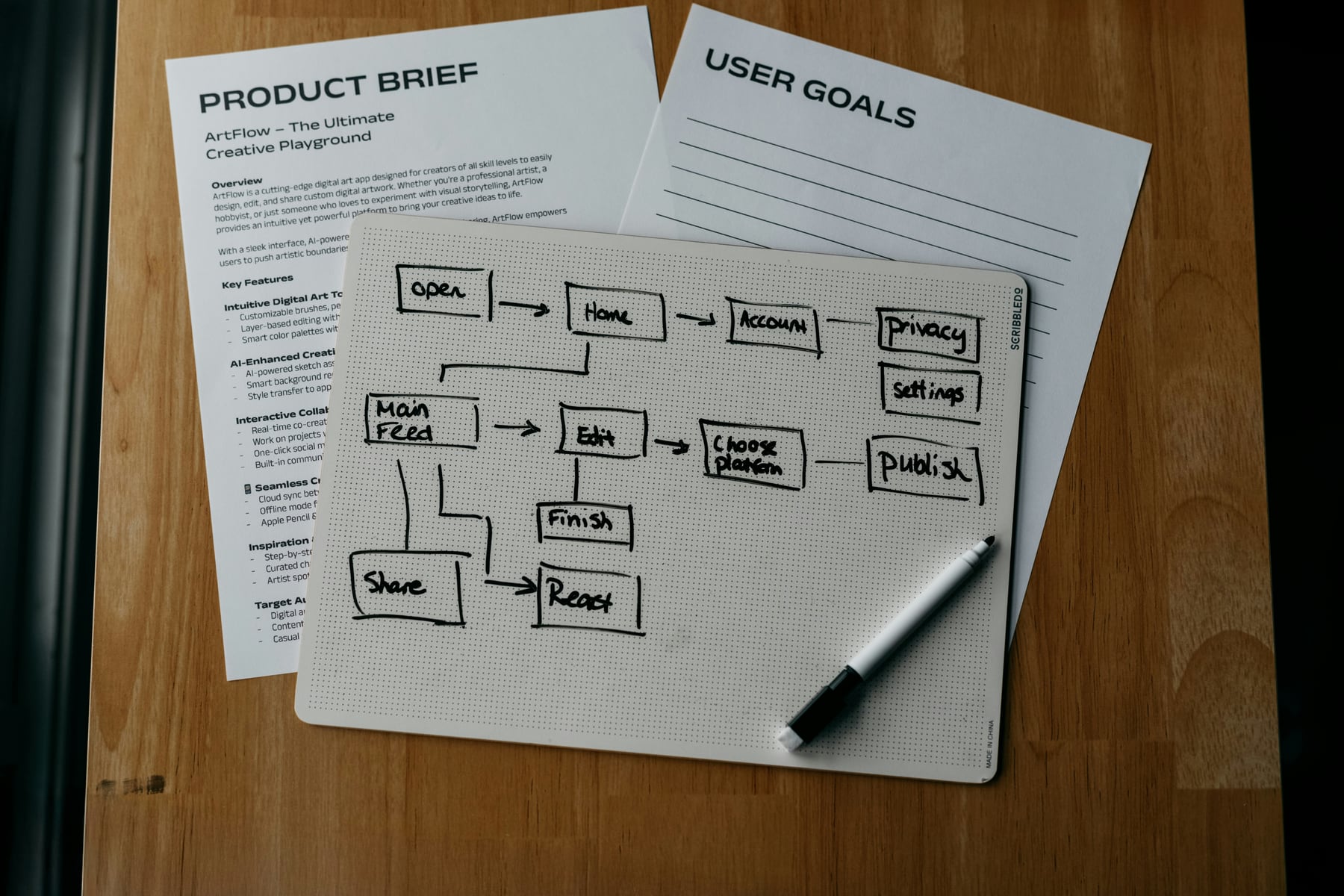
Most operations consultants start with the tech stack. They audit your systems, identify gaps, and hand you a beautiful recommendation deck full of workflows, integrations, and best practices.
And then nothing changes.
Not because the recommendation was wrong. But because nobody asked the humans whether they'd actually adopt it. Nobody understood the resistance that would surface, the workarounds people have built, the reasons those "inefficient" manual processes exist in the first place.
I watched it happen at an organization I supported a few years back. Previous consultant had built them a gorgeous project management system. Color-coded. Automated. Truly elegant. And the staff had quietly abandoned it within six weeks, returning to their sticky notes and email chains because nobody had asked them what they actually needed. Nobody had built trust before building infrastructure.
I come at it backwards.
I lead with relationship. With trust. With curiosity about your actual life, not just your organizational problems. And by the time I recommend something, I understand the humans who have to use it. I know where the pushback will come from. I've already built the credibility to move through it.
The system isn't imposed. It's co-created. And that's why it sticks.
I spent years thinking I was a weird hybrid. Too people-focused for the systems world. Too systems-obsessed for the relationship-builders.
Turns out that's exactly where the magic lives.
Infrastructure That Holds Without Heroism
Here's what I've learned sitting across from dozens of leaders who are stretched too thin: the problem is rarely what it looks like on the surface. The donor management system that's "not working" is usually a symptom of something deeper. Unclear roles. Processes that were built for a team half this size. Technology that was chosen in a panic and never properly implemented. A founder who's still doing things manually because delegation feels like losing control.
The infrastructure underneath is either holding you up or wearing you down. And most people can't see which it is because they're too close to it, too deep in the daily fires to zoom out.
So if you're reading this and feeling that familiar tightness in your chest, the one that says "I'm the one holding all of this together," I want you to know something:
That's not a character flaw. It's not a lack of discipline or poor time management. It's a systems problem. And systems problems have solutions.
You don't have to figure it out alone. But even if you never work with me or anyone like me, start here: look at the last week and ask yourself where the margin was. Where was there space for the vet appointment to go sideways without your whole week collapsing?
If you can't find it, that's not a failure. That's information. And it's the first step toward building something that can hold you instead of the other way around.
If you want help seeing the full picture, that's exactly what the Clarity Diagnostic is for.
It's a low-cost, low-friction starting point. You fill out a detailed questionnaire on your own time. I read between the lines, map what's underneath, and send you back a clear picture of where your infrastructure is holding and where it's quietly falling apart.
No sales call. No big commitment. Just clarity.
Archive note
This essay was first published in 2025. The current private consulting entry point is the AI Readiness Assessment.
See the assessment